
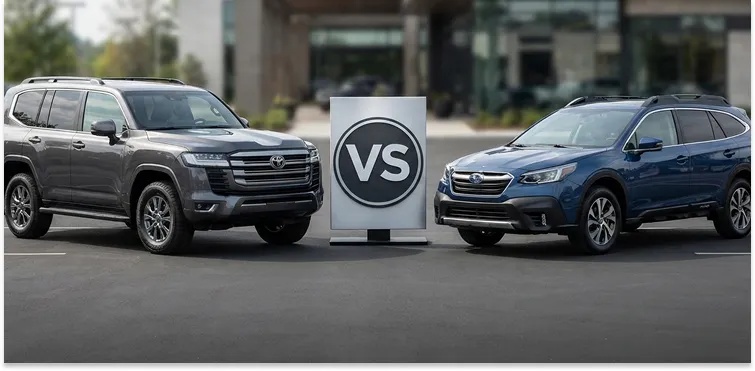
Choosing between an SUV and a crossover can be challenging because both offer a higher driving position, practical interiors, and modern features.
However, they are built differently and suit different driving needs, so understanding these differences is important before you buy a car from a trusted car seller.
SUVs are designed for strength, power, and tough conditions, while crossovers focus on comfort, efficiency, and everyday usability.
Understanding the key differences between SUVs and crossovers can help you choose the right vehicle based on your lifestyle, budget, and driving preferences.
SUV vs Crossover: Key Differences Explained
Before comparing the features in detail, it is important to understand the main differences between SUVs and crossovers. The table below highlights the key areas where they differ, including design, performance, comfort, efficiency, and overall practicality.
| Feature | SUV | Crossover |
| Construction | Usually built on a truck-based body-on-frame platform | Built on a car-based unibody platform |
| Driving Style | More powerful and rugged | More comfortable and car-like |
| Off-Road Capability | Better for rough terrain and extreme conditions | Suitable for light off-road driving |
| Size | Generally larger with a stronger road presence | Usually smaller and easier to handle |
| Passenger Comfort | Offers more space, especially larger SUVs | Comfortable but often more compact |
| Cargo Capacity | Excellent for large loads and family use | Practical for daily needs |
| Fuel Efficiency | Usually lower due to size and weight | Better fuel economy |
| Towing Ability | Higher towing capacity | Limited towing capability |
| Handling | Feels heavier but more capable | Easier and smoother to drive |
| Maintenance Cost | Often higher | Usually more affordable |
| Best For | Off-road driving, towing, large families | City driving, commuting, and daily practicality |
Learn More:
- AWD vs FWD Explained
- Certified Pre-Owned vs Regular Used Car
- New vs Used Car
- Mercedes vs Porsche
- BMW vs Audi for US Military
- AWD vs 4WD
- Electric Cars vs Hybrid Cars
- Hybrid or Plug-In Hybrid
- FWD vs RWD When Buying a Used Car
- AWD vs RWD When Buying a Car
- Should You Buy or Lease a New Car
- 4WD vs AWD
- Hatchback vs Sedan
Vehicle Design and Construction
The biggest difference between SUVs and crossovers comes from their underlying construction. This affects how they drive, how much they can carry, and where they perform best.
SUV
Traditional SUVs are often built using a body-on-frame construction, similar to pickup trucks. This design provides extra strength and durability, making SUVs better suited for towing, carrying heavy loads, and handling challenging terrain.
Because of their stronger structure, SUVs are commonly chosen by drivers who need power, reliability, and off-road capability.
Crossover
Crossovers use a unibody construction, where the body and frame are built as one piece. This design is lighter and more efficient, giving crossovers a smoother ride and better fuel economy.
They are designed mainly for everyday driving, combining the practicality of an SUV with the comfort and handling of a passenger car.
Vehicle Size, Dimensions, and Road Presence
Size plays an important role in how a vehicle feels on the road and how practical it is for different drivers.
SUV
SUVs are usually larger, taller, and wider than crossovers. Their bigger dimensions provide a stronger road presence and more interior space.
However, the larger size can make parking and maneuvering in tight city areas more challenging.
Crossover
Crossovers are generally more compact and easier to drive in urban environments. Their smaller footprint makes them convenient for daily commuting and crowded streets.
They still offer a raised driving position but are easier to manage than larger SUVs.
Passenger Space and Interior Comfort
Interior space is one of the main reasons buyers choose SUVs and crossovers.
SUV
Large SUVs often provide spacious cabins with three-row seating options, making them ideal for larger families. They usually offer more legroom, headroom, and passenger flexibility.
Crossover
Crossovers provide comfortable seating for families and passengers but usually have less space compared to full-size SUVs. They are better suited for small families or drivers who want practicality without a large vehicle.
Cargo Space and Storage Capacity
Cargo flexibility is another important factor when comparing these vehicles.
SUV
SUVs generally provide more cargo space, especially larger models with three-row seating. They are ideal for carrying luggage, sports equipment, camping gear, and other bulky items.
Their larger dimensions and higher cargo capacity make SUVs a better choice for drivers who need maximum storage flexibility for family trips, outdoor activities, or heavy everyday use.
Crossover
Crossovers offer practical cargo space that is suitable for daily needs such as groceries, shopping bags, and family essentials. Their compact design makes storage easier to manage without taking up too much road space.
Many crossovers also feature a lower cargo floor, making it easier to load and unload items. This makes them a convenient option for urban drivers and small families who want everyday practicality.
Driving Experience and Handling
The driving feel of SUVs and crossovers can be different due to their size, weight, and construction. It is important to test drive a car properly before buying to understand comfort, handling, and performance.
SUV
SUVs offer a stronger and more commanding driving experience with higher seating, better stability, and rugged construction. However, their heavier build can make steering and cornering feel less agile. Buyers should also check mileage when buying an SUV, as larger engines may increase fuel costs.
Crossover
Crossovers provide a more car-like driving experience with lighter handling, smoother steering, and easier maneuverability. Their unibody construction allows them to feel more responsive and comfortable during daily driving.
They are especially well-suited for city commuting and highway travel, offering a balanced combination of comfort, control, and practicality.
Engine Performance and Power Capability
Engine options influence acceleration, performance, and overall capability. Choosing the right engine depends on how you plan to use your vehicle, whether for daily commuting, family travel, towing, or outdoor adventures.
SUV
SUVs often come with larger engines that deliver higher horsepower and torque. This extra power makes them better suited for towing, carrying heavy loads, and handling challenging driving conditions.
Their stronger performance is especially useful for drivers who need a vehicle for long trips, outdoor activities, or demanding workloads where additional capability is important. One of the common mistakes people make when buying an SUV is choosing a powerful engine that exceeds their actual driving needs, leading to higher fuel and maintenance costs.
Crossover
Crossovers typically use smaller, fuel-efficient engines that provide enough power for everyday driving. They are designed to handle daily commuting, highway travel, and family transportation with ease.
While they may not match the power of larger SUVs, crossovers offer a practical balance between performance, smooth driving, and better fuel economy for regular use. For those buying a car for the first time or buying a car on a tight budget, a crossover is often a smart choice because it combines efficiency, comfort, and lower ownership costs.
Towing Capacity and Heavy-Duty Capability
Towing ability is an important consideration for drivers who need to carry trailers, boats, or additional equipment. SUVs and crossovers differ significantly in their towing strength due to their construction, engine power, and overall vehicle capability.
SUV
SUVs are the better choice for heavy-duty towing because they are built with stronger frames, more powerful engines, and higher load capacities. They can handle larger trailers, boats, and heavy equipment with greater stability.
If you’re buying a used SUV for towing, look for signs of a bad used car you should avoid, such as transmission problems, suspension wear, or previous towing-related damage, as these issues can affect both safety and performance.
Crossover
Crossovers can handle light towing tasks, such as small trailers or recreational equipment, but they are not designed for heavy hauling. Their lighter construction limits their towing capacity compared to traditional SUVs.
Before buying a used crossover, following a complete car inspection checklist can help ensure the engine, brakes, suspension, and towing-related components are in good condition for reliable everyday use.
Off-Road Performance and Terrain Handling
Off-road capability is a major difference between SUVs and crossovers. While both vehicle types can handle different road conditions, SUVs are built for tougher environments, whereas crossovers are designed mainly for everyday driving with occasional adventure.
SUV
SUVs are built to handle challenging terrains such as mud, snow, gravel roads, and rocky trails. Features like four-wheel drive systems, higher ground clearance, and durable suspension setups make them more capable in demanding conditions.
Their rugged construction provides better traction and stability when driving off-road, making SUVs a preferred choice for outdoor enthusiasts and drivers who frequently explore difficult terrain.
Crossover
Crossovers can handle light off-road conditions, especially models equipped with all-wheel drive and advanced traction systems. They perform well on dirt roads, light trails, and slippery surfaces.
However, most crossovers are designed primarily for paved roads and daily driving. They are better suited for occasional adventures rather than extreme off-road use.
Fuel Efficiency and Running Costs
Fuel efficiency and ownership costs are important factors for many buyers, especially those who drive frequently. SUVs and crossovers differ in fuel consumption because of their size, weight, and engine design.
SUV
Due to their larger engines, heavier construction, and stronger performance capabilities, SUVs usually consume more fuel than crossovers. They may also have higher running costs because of larger tires, maintenance needs, and more expensive components.
However, the additional fuel expense can be worthwhile for drivers who need extra power, towing ability, or off-road capability.
Crossover
Crossovers are lighter and more fuel-efficient, making them a practical choice for daily commuters and families. Their smaller engines help reduce fuel consumption while still providing enough performance for regular driving.
With lower fuel expenses and generally more affordable maintenance, crossovers are often a cost-effective option for buyers looking for long-term savings.
Ride Comfort and Daily Driving Experience
Ride comfort is an important consideration for drivers who spend a lot of time on the road. While both SUVs and crossovers offer a higher driving position, they provide different levels of smoothness and everyday convenience.
SUV
SUVs provide a commanding driving position with better visibility and a strong sense of security behind the wheel. Their larger size and sturdy construction make them feel stable, especially on highways and rough roads.
However, their heavier build can sometimes result in a firmer ride and less agile handling compared to smaller vehicles. Some drivers may notice that larger SUVs feel less smooth in everyday city driving.
Crossover
Crossovers are designed to deliver a smoother and more comfortable driving experience. Their car-based construction helps reduce road noise, improve handling, and provide a more relaxed ride.
They are ideal for daily commuting, family trips, and urban driving where comfort, convenience, and easy handling are top priorities.
Parking, Maneuverability, and City Driving
City driving requires a vehicle that is easy to control, park, and navigate through crowded roads. SUVs and crossovers offer different levels of convenience depending on their size and design.
SUV
Large SUVs can be more challenging to park and maneuver in tight spaces due to their bigger dimensions and wider body. Parking in busy urban areas may require extra care, especially in smaller parking spots.
However, modern SUVs often include features like parking sensors, 360-degree cameras, and driver assistance systems to make city driving easier and more convenient.
Crossover
Crossovers are easier to maneuver in city environments because of their compact size and lighter construction. They provide better visibility and smoother handling in traffic.
Their smaller footprint makes them a practical choice for urban drivers who need easier parking, quick navigation, and everyday convenience.
Highway Comfort and Long-Distance Driving
Highway performance is an important factor for drivers who frequently travel long distances. Both SUVs and crossovers provide comfortable highway experiences, but they offer different advantages.
SUV
SUVs provide excellent highway stability with a higher seating position and a strong road presence. Larger models are especially comfortable for long-distance trips with multiple passengers and luggage.
Their spacious interiors and powerful engines make them suitable for family road trips, extended travel, and demanding highway conditions.
Crossover
Crossovers offer a smooth and efficient highway driving experience with easier handling and better fuel economy. Their lighter design helps provide a relaxed and comfortable ride.
They are a great choice for commuters and families who want a balance of comfort, efficiency, and practicality during regular trips.
Safety Features and Crash Protection
Safety is a key consideration for many buyers when choosing between an SUV and a crossover. Both vehicle types now offer advanced safety features and driver assistance technologies.
SUV
SUVs often provide a strong feeling of protection due to their larger size, higher driving position, and heavier construction. Many models also include advanced safety systems to improve driver confidence.
Features such as adaptive cruise control, blind-spot monitoring, automatic emergency braking, and lane assistance are commonly available in modern SUVs.
Crossover
Modern crossovers offer excellent safety features and strong crash protection despite their smaller size. Many models include advanced technologies designed to prevent accidents and protect passengers.
Safety features such as automatic emergency braking, lane-keeping assistance, multiple airbags, and driver monitoring systems make crossovers a reliable choice for families.
Technology, Infotainment, and Interior Features
Modern SUVs and crossovers come equipped with advanced technology, making comfort and connectivity important factors in the buying decision.
SUV
SUVs often offer premium interiors, larger infotainment displays, advanced driver assistance systems, and luxury features, especially in higher trims.
Many larger SUVs also provide additional comfort features such as premium sound systems, heated seats, and advanced climate controls.
Crossover
Crossovers provide many of the same modern technologies at a more affordable price. They commonly include smartphone connectivity, touchscreen infotainment systems, digital displays, and convenient driver assistance features.
Their focus is on providing useful technology without increasing the overall cost of ownership.
Maintenance Costs and Reliability
Maintenance expenses can significantly affect long-term ownership costs. The difference between SUVs and crossovers comes from their size, components, and mechanical complexity.
SUV
SUVs can have higher maintenance costs due to larger engines, bigger tires, heavier components, and increased fuel consumption. Repairs and replacement parts may also be more expensive for larger models.
Before purchasing a used SUV, always check a car’s history before making your final decision. A detailed vehicle history report can reveal previous accidents, major repairs, and service records that may affect long-term reliability.
Crossover
Crossovers generally have lower maintenance costs because they use lighter components, smaller engines, and more fuel-efficient systems. Their car-based design often makes repairs and servicing more affordable.
When buying a crossover, knowing what to look for when buying and understanding common dealer tricks to watch out for can help you choose a well-maintained vehicle and avoid unnecessary ownership costs.
Price, Resale Value, and Overall Ownership Cost
The purchase price and long-term ownership expenses are important factors when deciding between an SUV and a crossover. Comparing pricing, resale value, and total running costs can help buyers avoid overpaying for a car and choose a vehicle that provides better value over time.
SUV
SUVs often have strong resale value because of their popularity, versatility, and demand among families and adventure-focused drivers. However, their higher purchase price, fuel costs, and maintenance expenses can increase overall ownership costs.
When buying an SUV, researching market prices and learning how to negotiate the best price can help buyers get better value for their investment. They are a worthwhile choice for drivers who need extra capability, space, and performance.
Crossover
Crossovers are generally more affordable to purchase and maintain, making them attractive for budget-conscious buyers. They provide many SUV-like benefits while keeping fuel and ownership costs lower.
For drivers who prioritize value, efficiency, and everyday practicality, a crossover often offers a better balance of features and affordability while helping them avoid overpaying for a car.
SUV vs Crossover: Which One Is Better for Different Buyers?
The better choice between an SUV and a crossover depends on your lifestyle, driving habits, and the features you value most.
While SUVs offer more power and capability, crossovers provide better efficiency and everyday convenience.
- Choose an SUV if you need: towing power, off-road capability, extra passenger space, or heavy-duty performance.
- Choose a crossover if you need: fuel efficiency, comfortable daily driving, easier handling, and lower ownership costs.
- Families: Larger SUVs work well for bigger families, while compact crossovers are ideal for smaller households.
- City drivers: Crossovers are usually more practical because they are easier to park and maneuver.
- Adventure drivers: SUVs are better suited for outdoor activities and challenging roads.
Popular SUV and Crossover Models to Consider
When choosing between an SUV and a crossover, looking at popular models can help you understand the different options available in the market.
Manufacturers offer a wide range of vehicles, from rugged SUVs built for performance to efficient crossovers designed for everyday driving.
Some popular SUVs include:
- Toyota Land Cruiser
- Ford Explorer
- Jeep Grand Cherokee
- Chevrolet Tahoe
Popular crossover models include:
- Honda CR-V
- Toyota RAV4
- Mazda CX-5
- Hyundai Tucson
Final Verdict
The choice between an SUV and a crossover depends on your driving needs and lifestyle. SUVs offer more power, durability, towing ability, and off-road performance, making them ideal for drivers who need maximum capability.
Crossovers are better for everyday use because they provide comfort, efficiency, easier handling, and lower running costs. For most urban drivers and families, a crossover offers the right balance of practicality and affordability.
However, if you regularly tow, travel off-road, or need extra space, a traditional SUV may be the better investment.