
How to Check Mileage When Buying from a Car Dealer
Checking the mileage is an important part of buying a used car. The odometer reading can help you understand how much the vehicle has been driven and give you an idea of its condition, maintenance needs, and value.
However, you should not rely on the odometer alone. A low-mileage car may still have heavy wear, while a higher-mileage vehicle may be well maintained.
In some cases, the mileage may also have been altered. This is why buying a used car from a reputable dealer can give you added confidence, as reputable dealers usually provide clearer vehicle history and maintenance information.
The best way to check mileage is to compare the odometer with the car’s age, vehicle history, service records, physical condition, and electronic data. These checks can help you confirm whether the mileage is accurate before buying.
Why Checking Mileage Matters When Buying a Used Car
Mileage is an important factor when buying a used car. It can give you an idea of how much the vehicle has been driven and how much wear its engine, transmission, brakes, and other parts may have experienced.
However, mileage is not everything. A well-maintained car with 100,000 miles can be a better choice than a poorly maintained car with only 60,000 miles.
This is why it is also important to test-drive a car properly and understand what to look for when buying a used vehicle. Checking the mileage helps you:
- Understand how much the car has been used.
- Compare the price with the car’s condition.
- Spot possible odometer tampering.
- Plan for future maintenance.
- Check if the car’s history is consistent.
- Avoid paying extra for falsely low mileage.
Always compare the mileage with the car’s age, service history, inspection records, and overall condition.
Start by Checking the Odometer
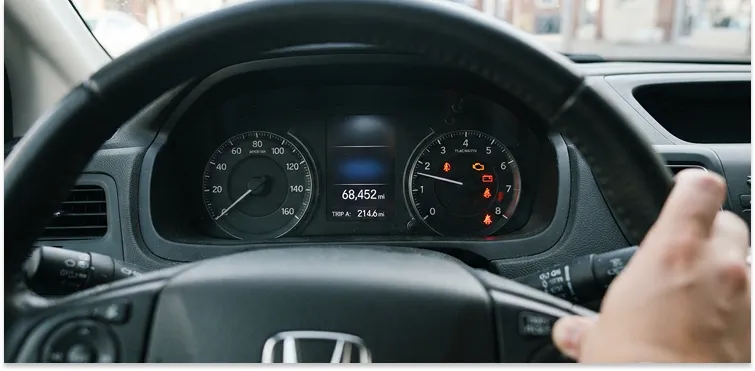
Begin by checking the odometer and noting the mileage shown on the dashboard.
This is especially important when buying a car for the first time, as checking the odometer is one of the common mistakes people make when buying used cars.
Whether it is digital or mechanical, the odometer reading should be checked carefully. Look for:
- The total mileage shown.
- Warning lights on the dashboard.
- A damaged or poorly fitted odometer.
- Missing pixels or display problems.
- Signs that the instrument cluster has been removed.
- Loose screws or marks around the dashboard.
These signs do not automatically mean the mileage has been changed. However, they can be reasons to check the car’s mileage history more carefully.
Compare the Mileage with the Car’s Age
Check whether the mileage seems realistic for the car’s age.
For example, a 10-year-old car with very low mileage may look attractive, but you should ask questions and look for proof.
You can calculate the average annual mileage using:
Average annual mileage = Total mileage ÷ Vehicle age
For example, a 7-year-old car with 70,000 miles has travelled around 10,000 miles per year.
If an older car has unusually low mileage, ask:
- Was it a second car?
- Was it stored for long periods?
- Was it mainly used for short journeys?
- Is there documentation to support the low mileage?
Remember, low mileage does not always mean a better car. A vehicle that has been unused for long periods can still develop problems due to age, lack of use, or poor storage.
Check the Vehicle’s History and Mileage Records
A vehicle history check can provide important information about how the mileage has changed over time.
Depending on the country and available records, a history report may include:
- Previous mileage readings.
- Registration and inspection records.
- Vehicle ownership history.
- Accident records.
- Import or export information.
- Insurance claims.
- Auction records.
- Salvage or write-off information.
- Recorded mileage at previous inspections.
The most important thing is to look for a logical mileage progression.
For example:
- 2019: 45,000 miles
- 2020: 52,000 miles
- 2021: 61,000 miles
- 2022: 70,000 miles
- 2023: 42,000 miles
A sudden drop from 70,000 to 42,000 miles is a serious warning sign.
The mileage recorded in the vehicle history should match the odometer reading as closely as possible. Small differences can sometimes occur due to reporting dates, but large unexplained differences require further investigation.
Review the Car’s Service and Maintenance History
Service records are one of the best ways to verify a used car’s mileage. They can also be an important part of your car inspection checklist before buying.
Look for invoices, service books, digital maintenance records, and inspection documents. Many service centres record the mileage whenever maintenance is carried out.
Check whether the mileage increases logically between:
- Oil changes.
- Brake replacements.
- Tyre changes.
- Annual services.
- MOT or inspection appointments.
- Major repairs.
- Dealership servicing.
For example, if a service invoice from two years ago shows 85,000 miles but the current odometer shows 65,000 miles, something is clearly wrong.
Also check the dates on the records. A service history should not only show regular maintenance; it should also support the mileage being advertised.
Inspect the Car for Signs of Mileage Wear
A car’s physical condition can help you decide whether the mileage seems realistic.
While different types of driving cause different kinds of wear, excessive wear in several areas may indicate that the car has been used more heavily than the odometer suggests.
For example, motorway driving may add many miles with less stop-and-start wear, while city driving can put more stress on the brakes, clutch, and other parts.
Therefore, checking for mileage-related wear is also useful when looking for signs of a bad used car you should avoid. Look closely at the following areas.
Check the Interior for Excessive Wear
The interior can provide useful clues about the vehicle’s use.
Inspect:
- The driver’s seat.
- Steering wheel.
- Gear selector.
- Pedals.
- Door handles.
- Armrests.
- Floor mats.
- Seat controls.
- Window switches.
A vehicle showing very low mileage but having a heavily worn steering wheel, badly damaged driver’s seat, and worn pedals should be investigated further.
The driver’s seat is particularly useful because it is used every time the vehicle is driven. However, interior wear can also depend on the driver’s weight, clothing, usage habits, and the quality of the materials.
One worn component does not prove mileage fraud. Look for a pattern of wear across several parts of the cabin.
Inspect the Exterior for Signs of Heavy Use
The exterior can also help you assess whether the mileage seems believable.
Check for:
- Excessive stone chips on the bonnet.
- Heavy wear on the front bumper.
- Scratches and dents.
- Faded paint.
- Damaged door handles.
- Worn headlights.
- Excessive road grime underneath the car.
- Signs of frequent motorway or commercial use.
A car that has travelled many miles on highways may show a large number of stone chips. A vehicle used heavily in urban areas may show more bumper scratches, parking damage, and wear around the doors.
Again, exterior condition is not a precise mileage measurement. It should be used together with the vehicle history and maintenance records.
Check the Mechanical Condition
A professional mechanical inspection can reveal whether the vehicle’s condition matches the mileage shown on the odometer.
Pay attention to:
- Engine noise.
- Transmission performance.
- Suspension condition.
- Steering components.
- Brake wear.
- Clutch condition on manual cars.
- Oil leaks.
- Exhaust smoke.
- Cooling system problems.
A high-mileage vehicle may naturally require more repairs, but a low-mileage car should not automatically be assumed to be mechanically perfect.
For example, a car with unusually worn suspension, a heavily worn clutch, and significant engine problems may have been driven more extensively than the advertised mileage suggests.
Use an OBD Scanner to Verify the Mileage
An OBD scanner can connect to a vehicle’s diagnostic system and read information stored in its electronic control modules.
Depending on the vehicle, mileage-related information may be stored in systems such as:
- The engine control module.
- The transmission control module.
- The body control module.
- The instrument cluster.
- Other electronic systems.
If different modules show inconsistent mileage information, this may indicate that the odometer or electronic data has been altered.
However, not every basic OBD scanner can read mileage from every vehicle. Some vehicles store mileage information differently, and specialist diagnostic equipment may be required.
For this reason, an OBD scan is best used as part of a wider inspection rather than as the only method of checking mileage.
Get a Professional Used Car Inspection
If you are serious about buying a used car, an independent inspection can be one of the most valuable steps you take.
A qualified mechanic or vehicle inspection service can assess:
- The engine.
- Transmission.
- Suspension.
- Brakes.
- Steering.
- Electrical systems.
- Body condition.
- Signs of accident repairs.
- Diagnostic data.
- General wear and tear.
An independent inspection is particularly important when buying a high-value vehicle or a car with unusually low mileage.
The seller may tell you that the car has been perfectly maintained. An independent inspection gives you an objective assessment before you commit to the purchase.
How to Spot Mileage Tampering
Mileage tampering, sometimes called odometer fraud or clocking, occurs when a vehicle’s recorded mileage is altered to make it appear less used.
Common warning signs include:
- The current mileage does not match previous records.
- The service history contains inconsistent mileage figures.
- The odometer appears recently replaced or damaged.
- The interior shows excessive wear for the advertised mileage.
- The seller refuses to provide history documents.
- The vehicle’s electronic modules show different mileage readings.
- The price seems unusually high because of exceptionally low mileage.
- The seller gives vague answers about previous ownership.
A single warning sign does not confirm fraud. However, several inconsistencies together should make you extremely cautious.
How to Check Mileage from a Private Seller
When buying from a private seller, ask direct questions about the car’s mileage and history.
Ask:
- How long have you owned the vehicle?
- How many miles did it have when you purchased it?
- Do you have service invoices?
- Where was the car serviced?
- Has the odometer or instrument cluster ever been replaced?
- Do you have previous inspection records?
- Was the car used for commuting or long-distance driving?
Ask to see the original documents rather than relying only on verbal statements.
You should also compare the seller’s answers with the vehicle’s history. If the seller says the car was rarely driven, but the records show consistently high annual mileage, investigate further.
Never feel pressured to buy immediately. A genuine seller should generally be willing to let you examine the car and verify its history.
How to Check Mileage When Buying from a Car Dealer
Buying from a dealer may give you access to more documentation, but you should still carry out your own checks.
Ask the dealer for:
- The vehicle history report.
- Service records.
- Previous inspection documents.
- Details of previous ownership.
- Confirmation of the recorded mileage.
Check whether the mileage shown in the advertisement matches the mileage on the vehicle and paperwork.
A reputable dealer should be able to explain the vehicle’s history clearly. If the dealer refuses to answer reasonable questions or avoids providing supporting documentation, consider looking at another vehicle.
You should also arrange an independent inspection if you have concerns, especially when buying an expensive used car.
Learn More:
- Top 10 Best Military Car Dealers in the World
- Top 10 Best Car Dealers in Europe
- Top 10 Best Car Dealers in Italy
- Top 10 Best Car Dealers in the World
- Top 10 Car Importers in the United States
- Top 10 Car Exporters for US Military in Germany
- Top 10 Verified Car Dealers in Germany
- Top 10 Trusted Car Dealers for the US Military
What to Do If You Suspect Mileage Fraud
If you find evidence that the mileage may have been altered, do not ignore it.
First, ask the seller for an explanation. There may be a legitimate reason for a discrepancy, such as an instrument cluster replacement or a data entry error.
However, if the explanation does not make sense:
- Do not make a payment or sign a purchase agreement.
- Keep copies of all advertisements and mileage claims.
- Save service records and vehicle history documents.
- Get an independent inspection.
- Ask a qualified professional to review the evidence.
- Report suspected fraud to the appropriate consumer or vehicle authority if necessary.
If you have already purchased the car and later discover serious mileage inconsistencies, seek appropriate legal or consumer advice in your country.
Used Car Mileage Checklist: What to Check Before Buying
Use this checklist before buying a used car:
Odometer
- Check the mileage displayed.
- Look for signs of dashboard or instrument cluster tampering.
- Record the mileage before the test drive.
Vehicle History
- Check previous mileage records.
- Look for unexplained mileage drops.
- Compare the history with the current odometer.
Service Records
- Review invoices and service documents.
- Check mileage recorded during previous maintenance.
- Confirm that the mileage increases logically over time.
Interior
- Inspect the driver’s seat.
- Check the steering wheel and gear selector.
- Look at the pedals and floor mats.
- Look for excessive wear.
Exterior
- Check for heavy stone chips.
- Inspect the paint and bodywork.
- Look for signs of extensive use or previous repairs.
Mechanical Condition
- Test the engine and transmission.
- Check the brakes and suspension.
- Look for leaks and unusual noises.
Electronic Data
- Consider using an OBD scanner.
- Check whether different vehicle systems show consistent information.
Professional Inspection
- Get an independent used car inspection if possible.
- Do not rely only on the seller’s claims.
Conclusion
Checking a used car’s mileage involves more than looking at the odometer. Compare it with the car’s age, history, service records, and overall condition.
Low mileage does not always mean a better car. A well-maintained high-mileage vehicle can be a better choice than a poorly maintained car with a suspiciously low reading.
Take your time, check the records, ask questions, and get a professional inspection if needed. This can help you avoid mileage fraud and make a more confident purchase.