
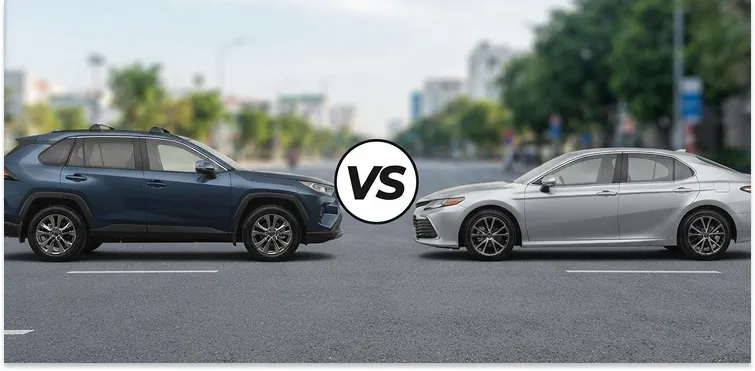
Choosing between an SUV and a sedan depends on your lifestyle, driving needs, and budget. SUVs offer more space, higher ground clearance, and greater versatility, while sedans provide better fuel efficiency, smoother handling, and lower running costs.
When making your decision, it is also important to buy a car from a top seller to ensure quality, reliability, and a better ownership experience.
Both vehicle types have their own advantages, making the decision easier when you understand their key differences. Factors like passenger space, cargo capacity, comfort, performance, and ownership costs all play an important role.
Whether you need a family-friendly vehicle or an economical daily commuter, comparing SUVs and sedans can help you choose the right option for your driving needs.
SUV vs Sedan: Key Differences Explained
Before choosing your next vehicle, it’s important to understand how SUVs and sedans differ in space, performance, comfort, efficiency, and overall ownership costs.
| Feature | SUV | Sedan |
| Body Style | Taller body with higher ground clearance | Lower, traditional passenger car design |
| Interior Space | More passenger and cargo space | Comfortable but more limited space |
| Driving Position | Higher seating position with better road visibility | Lower seating position with a car-like feel |
| Fuel Efficiency | Usually consumes more fuel due to size and weight | Generally more fuel-efficient |
| Performance | Better for rough roads and heavy loads | Better handling and smooth highway driving |
| Maintenance Cost | Often higher due to larger components | Usually lower maintenance expenses |
Learn More:
- AWD vs FWD Explained
- Certified Pre-Owned vs Regular Used Car
- New vs Used Car
- Mercedes vs Porsche
- BMW vs Audi for US Military
- AWD vs 4WD
- Electric Cars vs Hybrid Cars
- Hybrid or Plug-In Hybrid
- FWD vs RWD When Buying a Used Car
- AWD vs RWD When Buying a Car
- Should You Buy or Lease a New Car
- 4WD vs AWD
Vehicle Size and Space
When comparing SUVs and sedans, size and interior space play an important role in deciding which vehicle best fits your daily needs and lifestyle.
SUV
SUVs are designed with a larger body structure, providing more space for passengers, luggage, and everyday equipment. Their taller design creates a spacious cabin with more headroom and easier entry and exit.
This makes SUVs a practical choice for families, outdoor enthusiasts, and drivers who frequently carry passengers or large items. Many SUVs also offer flexible seating configurations, including third-row seating in larger models.
Sedan
Sedans have a lower and more compact design compared to SUVs. While they may not offer the same amount of interior space, they provide enough room for individuals, couples, and small families.
Their smaller dimensions also make them easier to park and maneuver, especially in crowded cities where space is limited.
Passenger Comfort and Interior Space
Comfort is an important factor when choosing between an SUV and a sedan, as each vehicle offers a different seating experience, cabin space, and level of convenience for passengers.
SUV
SUVs usually provide a more open and comfortable cabin experience. The higher roofline allows passengers to sit comfortably without feeling restricted, especially during long journeys.
Many modern SUVs include premium features such as adjustable seats, climate control zones, advanced infotainment systems, and spacious rear seating areas.
Sedan
Sedans focus on providing a comfortable and refined passenger experience. Their lower seating position creates a more connected driving feel, and many sedans offer excellent seat support and quiet cabins.
For daily commuting or regular highway driving, a sedan can provide a smooth and comfortable ride without needing extra space.
Cargo Capacity and Storage
Storage needs can greatly influence your vehicle choice, as SUVs and sedans offer different levels of cargo space, flexibility, and practicality for everyday use.
SUV
Cargo space is one of the biggest advantages of an SUV. The large rear storage area allows drivers to carry groceries, sports equipment, luggage, and other bulky items easily. If you buy an SUV from a top car seller, you can also find models with practical storage features designed for everyday needs and long trips.
Many SUVs also feature foldable rear seats, creating additional storage space for larger loads. This flexibility makes them ideal for families and active lifestyles.
Sedan
Sedans usually have a separate trunk that provides secure storage for everyday items. While the trunk space is often smaller than an SUV’s cargo area, it is still practical for normal commuting needs.
Drivers who mainly carry personal belongings and do not require large storage capacity may find a sedan completely suitable.
Driving Experience and Performance
The way a vehicle drives can greatly impact your ownership experience, so comparing SUV and sedan performance, handling, and road comfort is essential before making a decision.
SUV
SUVs offer a commanding driving position because the driver sits higher above the road. This provides better visibility and a feeling of confidence behind the wheel. Before purchasing a used SUV, it is recommended to check a car’s history to understand its past ownership, service records, and potential issues.
However, SUVs are generally heavier, which can affect acceleration, cornering, and fuel consumption compared to smaller vehicles. Checking details like mileage is also important, so make sure to check mileage when buying to evaluate the vehicle’s condition and expected lifespan.
Sedan
Sedans are known for their balanced handling and smooth driving experience. Their lower center of gravity helps provide better stability, sharper cornering, and a more responsive feel.
For drivers who enjoy sporty handling and a traditional driving experience, sedans often have an advantage. Before finalizing your purchase, taking time to test drive a car properly can help you understand its comfort, performance, and overall driving experience.
Fuel Efficiency and Running Costs
Fuel economy and ownership expenses are important factors when choosing a vehicle, as SUVs and sedans differ in fuel consumption, maintenance needs, and long-term running costs.
SUV
Due to their larger size, heavier weight, and powerful engines, SUVs usually consume more fuel than sedans. However, modern hybrid and fuel-efficient SUV models have improved significantly.
Drivers should consider fuel costs, especially if they travel long distances regularly.
Sedan
Sedans are generally more fuel-efficient because they are lighter and more aerodynamic. This makes them a cost-effective option for daily commuters and drivers looking to reduce fuel expenses.
Smaller engines and better mileage can lead to noticeable savings over time.
Safety and Driving Confidence
Safety features and overall driving confidence are key considerations when choosing between an SUV and a sedan, as both vehicle types offer different levels of visibility, stability, and protection.
SUV
SUVs often provide a strong sense of safety because of their larger structure, elevated seating position, and improved visibility.
Many modern SUVs include advanced safety features such as adaptive cruise control, lane assistance, blind-spot monitoring, and automatic emergency braking.
Sedan
Sedans also offer excellent safety performance thanks to modern safety technology and robust vehicle structures. Their lower center of gravity can provide better stability during sudden turns or emergencies.
Many highly rated sedans achieve excellent crash-test results and include advanced driver-assistance systems.
Off-Road Capability and Ground Clearance
For drivers who face rough roads or challenging terrains, ground clearance and off-road capability are important factors when choosing between an SUV and sedan. Understanding these factors is especially helpful when buying a second-hand car to make a smarter purchase decision.
SUV
SUVs are the clear winner when it comes to rough roads and off-road driving. Their higher ground clearance helps them handle uneven surfaces, gravel roads, snow, and challenging terrain with greater confidence.
Models with four-wheel drive (4WD) or all-wheel drive (AWD) systems provide additional traction for difficult driving conditions. However, buyers should research market prices carefully to avoid overpaying and negotiate the best price when purchasing an SUV.
Sedan
Sedans are mainly designed for paved roads and urban driving. Their lower ground clearance makes them less suitable for rough terrain, deep snow, or uneven roads.
However, they perform very well on highways and city streets. When buying from dealerships or private sellers, being aware of dealer tricks to watch out for can help you make a more informed decision and choose a vehicle that offers better value.
Comfort for Daily Driving and Long Trips
Comfort is an important factor when choosing between an SUV and a sedan, especially for daily driving and long journeys. Knowing the common mistakes people make when buying can help you choose a vehicle that fits your needs and lifestyle.
SUV
SUVs offer great comfort for long trips with spacious interiors and a higher seating position. Families often choose them for extra passenger space and a more confident driving experience, especially when buying a car for the first time.
However, when buying a car on a tight budget, consider maintenance costs, fuel efficiency, and vehicle condition. Always check for signs of a bad used car you should avoid before purchasing.
Sedan
Sedans offer a comfortable and quiet driving experience, especially for highway travel. Their smooth handling and efficient performance make them ideal for daily commuting and regular road trips.
With their lower ride height, balanced driving feel, and better fuel economy, sedans are often a practical choice for drivers who prioritize comfort, affordability, and easy everyday use.
Maintenance Costs and Reliability
Long-term ownership depends on maintenance expenses and vehicle dependability, making reliability and repair costs important factors when comparing SUVs and sedans.
SUV
SUV maintenance costs can be higher because they often have larger engines, bigger tires, and more complex systems. Repair and replacement parts may also cost more.
However, many SUV models from reliable brands offer excellent durability and long-term performance.
Sedan
Sedans usually have lower maintenance expenses because they use simpler components and smaller engines. Tires, fuel, and routine servicing are often more affordable.
For buyers looking for affordable ownership, sedans can be a practical option.
Price, Resale Value, and Ownership Cost
The total cost of owning a vehicle goes beyond the purchase price, making it important to compare SUVs and sedans based on affordability, resale value, maintenance, and long-term expenses.
SUV
SUVs often have higher purchase prices because of their larger size and additional features. However, their popularity has helped many SUV models maintain strong resale values.
Demand for family-friendly vehicles and versatile transportation continues to support SUV value in the used car market.
Sedan
Sedans generally have a lower starting price, making them attractive for budget-conscious buyers. They also offer lower insurance, fuel, and maintenance costs in many cases.
Although SUV demand has increased, well-maintained sedans from reliable brands can still provide excellent resale value.
SUV vs Sedan: Which Vehicle Is Better for Different Buyers?
The best choice between an SUV and a sedan depends on your lifestyle, driving needs, budget, and priorities, so understanding which vehicle suits different types of buyers can make your decision easier.
Best Choice for Families
SUVs are usually the better option for families because they provide more seating space, larger cargo capacity, and easier access for children.
Vehicles like the Toyota Highlander, Honda CR-V, and Hyundai Tucson are popular choices among family buyers.
Best Choice for City Drivers
Sedans are often better suited for city driving because they are easier to park, more fuel-efficient, and simpler to maneuver through busy streets.
Models such as the Toyota Corolla, Honda Civic, and Hyundai Elantra are known for practicality and efficiency.
Best Choice for Long-Distance Travelers
SUVs are ideal for travelers who need extra comfort, storage, and flexibility for long journeys. Their spacious cabins and higher driving position make extended trips more enjoyable.
However, drivers who prioritize fuel savings may prefer efficient sedans designed for highway mileage.
Best Choice for Budget-Conscious Buyers
Sedans are usually the better choice for buyers who want lower purchase prices, better fuel economy, and affordable maintenance.
They provide reliable transportation without the higher costs often associated with larger vehicles.
Popular SUV and Sedan Options to Consider
Exploring popular SUV and sedan models can help you compare different features, performance levels, and price ranges to find a vehicle that best matches your driving needs.
Some popular SUV choices include:
- Toyota RAV4
- Honda CR-V
- Hyundai Tucson
- Ford Explorer
- BMW X3
- Mercedes-Benz GLC
Popular sedan options include:
- Toyota Camry
- Honda Accord
- Toyota Corolla
- Hyundai Elantra
- BMW 3 Series
- Mercedes-Benz C-Class
Final Verdict
The choice between an SUV and a sedan depends on what matters most to you. SUVs are the better option for buyers who need extra space, higher visibility, family-friendly features, and better capability on different road conditions.
Sedans are a smarter choice for drivers who want better fuel economy, easier handling, lower maintenance costs, and affordable ownership.
If you frequently travel with family, carry large items, or drive on uneven roads, an SUV may be the right fit. If you mainly drive in cities and want an economical, comfortable, and efficient vehicle, a sedan could be the better choice. The best vehicle is the one that matches your daily needs, driving style, and budget.