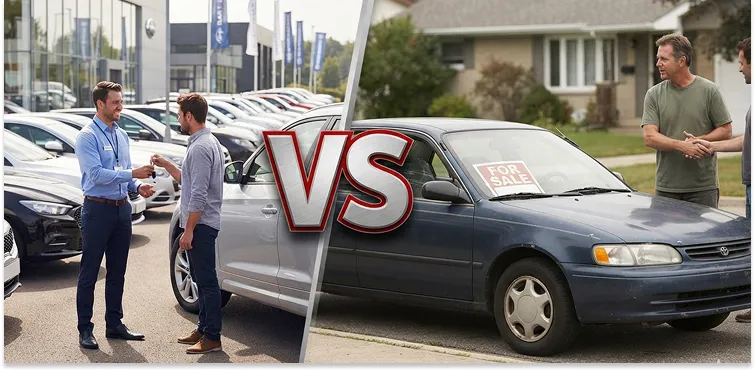
Buying a used car requires careful consideration, especially when deciding between a dealership and a private seller. Each option has different benefits depending on your budget, needs, and buying experience.
A private seller may offer lower prices and flexible negotiation, while a dealership can provide warranties, financing options, and professional support.
Understanding the key differences in price, vehicle condition, protection, and overall buying experience can help you make the right choice.
Main Factors to Consider: Dealership vs Private Seller
Before making a decision, it is important to compare the key factors that separate buying from a dealership and a private seller.
| Factor | Private Seller | Dealership |
| Price | Usually lower prices with fewer additional fees | Prices may be higher due to dealership services and preparation |
| Vehicle Inspection | Buyer is usually responsible for inspection | Many dealers inspect and prepare vehicles before sale |
| Warranty | Usually sold “as-is” with limited protection | Some vehicles may include warranties or guarantees |
| Vehicle History | Depends on seller transparency and available records | Often provides vehicle history reports and documentation |
| Selection | Limited to one or a few vehicles | Wide range of makes, models, and trims |
| Financing | Usually requires personal loans or cash payment | Offers dealership financing options |
| Negotiation | More flexible with pricing | Negotiation may be limited but depends on the dealer |
| Paperwork | Buyer handles more responsibilities | Dealer often manages registration and documentation |
| Reliability | Depends heavily on the individual seller | More accountability through a business |
| After-Sale Support | Usually little or no support | Customer service and maintenance options may be available |
Learn More:
- AWD vs FWD Explained
- Certified Pre-Owned vs Regular Used Car
- New vs Used Car
- Mercedes vs Porsche
- BMW vs Audi for US Military
- AWD vs 4WD
- Electric Cars vs Hybrid Cars
- Hybrid or Plug-In Hybrid
- FWD vs RWD When Buying a Used Car
- AWD vs RWD When Buying a Car
Price and Overall Cost
The purchase price is often the biggest factor when choosing between a dealership and a private seller. However, the lowest price does not always mean the best deal.
Researching the vehicle’s value can help you avoid overpaying and negotiate the best price.
From a Private Seller
Buying from a private seller often means paying a lower price because there are no dealership overhead costs, advertising expenses, or preparation fees included in the price.
Private sellers may also be more willing to negotiate, especially if they want to sell the vehicle quickly. However, buyers should consider additional costs such as inspections, repairs, taxes, registration fees, and possible maintenance issues after purchase.
Buying From a Dealership
Dealership vehicles may cost more because dealers often recondition cars, complete inspections, handle paperwork, and provide customer support. These services add value but can increase the final price.
Although the upfront cost may be higher, buying from a dealership can reduce the risk of unexpected repair expenses, especially when purchasing a certified pre-owned vehicle.
Vehicle Condition and Inspection
The condition of the vehicle is one of the most important factors to evaluate before buying a used car. A proper inspection can help identify hidden issues, avoid costly repairs, and make a more confident purchase.
Using a complete car inspection checklist can also help buyers review important areas before finalizing the deal, while staying aware of dealer tricks to watch out for can prevent unexpected problems.
Private Seller
When buying from a private seller, the responsibility of checking the vehicle usually falls on the buyer. Sellers may provide maintenance records, but the quality of information can vary.
Before purchasing, buyers should:
- Check the service history
- Inspect the engine, transmission, and exterior condition
- Take the vehicle for a test drive
- Request a professional inspection
- Verify mileage and accident history
A private sale can be a great deal, but buyers need to perform careful research.
Dealership
Most reputable dealerships inspect vehicles before putting them on sale. Many dealers perform mechanical checks, cleaning, repairs, and safety inspections.
Some dealerships also offer certified pre-owned vehicles that meet specific manufacturer standards, giving buyers extra confidence about the vehicle’s condition.
Warranty and Buyer Protection
Warranty coverage can make a significant difference when purchasing a used vehicle.
Private Seller
Most private vehicle sales are completed on an “as-is” basis, meaning the buyer accepts the vehicle in its current condition.
If problems appear after purchase, the seller is usually not responsible. This makes inspections and vehicle history checks extremely important when buying privately.
Dealership
Dealerships may provide more buyer protection through:
- Limited warranties
- Certified pre-owned programs
- Return policies (where available)
- Service agreements
- Consumer protection regulations
These benefits can provide additional peace of mind, especially for buyers purchasing expensive vehicles.
Car History and Documentation
Understanding a vehicle’s background helps buyers avoid unexpected problems.
Private Seller
A private seller may provide important documents such as:
- Maintenance records
- Registration history
- Previous ownership details
- Repair receipts
However, the availability and accuracy of these documents depend entirely on the seller.
Dealership
Dealerships usually maintain organized documentation and may provide vehicle history reports showing:
- Previous accidents
- Ownership history
- Mileage records
- Service information
Professional documentation can make the buying process easier and more transparent.
Vehicle Selection
The number of available vehicles can vary significantly between private sellers and dealerships.
Private Seller
Private sellers usually offer a limited selection. You may find a specific vehicle at a good price, but you cannot easily compare multiple models in one place.
Dealership
Dealerships offer a wider range of vehicles, including different:
- Brands
- Models
- Body styles
- Features
- Price ranges
This makes dealerships convenient for buyers who want to compare multiple options before deciding.
Financing Options
Financing availability can significantly impact your car-buying decision, especially if you plan to use a loan instead of paying the full amount upfront.
Understanding the best ways to finance a car can help you choose the right payment option, especially when buying a car on a tight budget and managing monthly expenses.
Financing Through a Private Seller
When purchasing from a private seller, buyers typically need to arrange their own payment method. Most private sales require cash, bank transfer, or financing secured independently through a bank, credit union, or other lender.
Since private sellers usually do not provide in-house financing, buyers should get loan approval before completing the purchase to ensure a smooth transaction.
Financing Through a Dealership
Dealerships often make financing more convenient by working with banks, financial institutions, and lending partners. Many dealers allow buyers to complete the financing process directly at the dealership.
This can provide benefits such as:
- Comparing multiple loan options
- Choosing suitable monthly payment plans
- Completing vehicle purchase and financing in one place
- Accessing promotional financing offers (when available)
Negotiation Flexibility
The ability to negotiate can affect the final price you pay, making it an important factor when choosing between a private seller and a dealership.
Private Seller
Private sales often provide more negotiation opportunities because the seller may have personal reasons for selling quickly.
Buyers can negotiate based on:
- Vehicle condition
- Market value
- Required repairs
- Mileage
Dealership
Dealership prices are often more structured, but negotiation may still be possible depending on the vehicle, market demand, and dealership policies.
Some dealers may offer discounts, trade-in deals, or additional services instead of reducing the price.
Paperwork and Registration
Completing the required paperwork is an important step when buying a vehicle, and the process can differ between private sellers and dealerships.
Paperwork With a Private Seller
When buying from a private seller, buyers are usually responsible for handling ownership transfer, registration, taxes, and required documents themselves.
It is important to verify:
- Vehicle title or ownership documents
- Registration records
- Sales agreement
- Vehicle history records
Paperwork Through a Dealership
Dealerships typically manage most paperwork, including ownership transfers, registration forms, and financing documents, making the process faster and more convenient.
This helps buyers avoid documentation mistakes and ensures a smoother vehicle purchase experience.
Trust and Reliability
Trust plays an important role when buying a used car, as the seller’s transparency and reputation can affect your overall buying experience.
Trusting a Private Seller
When purchasing from a private seller, reliability depends on the individual. Some sellers provide honest information and complete records, while others may not disclose every vehicle issue.
Buyers should verify the car’s history, inspect the vehicle, and review all documents before making a decision.
Trusting a Dealership
Dealerships often provide greater accountability because they operate as established businesses with reputations to maintain. Many offer vehicle inspections, documented histories, and customer support.
This can give buyers more confidence and a more structured purchasing experience.
Learn More
- Top 10 Best Military Car Dealers in the World
- Top 10 Best Car Dealers in Europe
- Top 10 Best Car Dealers in Italy
- Top 10 Best Car Dealers in the World
- Top 10 Car Importers in the United States
- Top 10 Car Exporters for US Military in Germany
- Top 10 Verified Car Dealers in Germany
- Top 10 Trusted Car Dealers for the US Military
After-Sale Support
After completing a car purchase, ongoing support can make a significant difference when handling maintenance, repairs, or unexpected vehicle issues.
Support From a Private Seller
Private sellers usually provide limited or no support after the sale is completed. Once ownership is transferred, any repairs, maintenance costs, or future problems typically become the buyer’s responsibility.
Buyers should carefully inspect the vehicle and review its history before purchasing, as there is usually no ongoing assistance available from the seller.
Support From a Dealership
Dealerships often provide better after-sale support through services such as maintenance assistance, warranty coverage, repair options, and customer service.
This additional support can make ownership easier and provide buyers with more confidence, especially when purchasing a used vehicle.
Dealership vs Private Seller: Which Is Safer?
When it comes to safety and peace of mind, buying from a dealership is generally considered the safer option because buyers often receive more protection, verified documentation, and professional support.
However, buying from a private seller can also be a safe choice if you carefully inspect the vehicle, check its history, and confirm all important documents before completing the purchase.
Safety When Buying From a Private Seller
Purchasing from a private seller may involve more risk because the buyer is responsible for verifying the vehicle’s condition, ownership records, and history.
To reduce risks, buyers should:
- Review the vehicle history report
- Inspect the car or hire a professional mechanic
- Confirm ownership documents
- Take a thorough test drive
- Avoid making payments before verifying the vehicle
Safety When Buying From a Dealership
Dealerships usually provide a more structured and secure buying experience. Reputable dealers often inspect vehicles, provide detailed paperwork, and follow consumer protection requirements.
Buyers may also benefit from:
- Certified vehicle inspections
- Warranty options
- Financing support
- Professional assistance with documentation
Overall, a dealership may offer greater security and convenience, while a private seller can provide value for buyers who are willing to do more research and due diligence.
Which Option Is Better for Different Buyers?
The better choice between a dealership and a private seller depends on your priorities, experience, budget, and the level of support you need during the buying process.
Buying From a Private Seller May Be Better If You:
- Want the lowest possible price
- Are comfortable inspecting vehicles
- Have experience buying used cars
- Prefer negotiating directly
- Do not need financing assistance
Buying From a Dealership May Be Better If You:
- Want convenience and support
- Need financing options
- Prefer warranty protection
- Want more vehicle choices
- Are buying your first used car
How to Decide Between a Dealership and Private Seller
Choosing between a dealership and a private seller depends on your budget, buying experience, and the level of convenience and protection you expect from the purchase.
Before making a decision, consider these important factors:
- Your budget – Can you afford unexpected repairs?
- Your experience – Do you know how to inspect a used vehicle?
- Your preferred protection level – Do you need warranty coverage?
- Your financing needs – Will you need a car loan?
- Your available time – Do you want a simple buying process?
A private seller may save money upfront, while a dealership may save time and reduce risk.
Final Comparison
Both dealerships and private sellers can be good choices when buying a used car. A private seller often provides lower prices and flexible negotiations, but it requires more research and responsibility from the buyer.
A dealership usually offers greater convenience, vehicle selection, financing options, and buyer protection, although prices may be higher.
The best choice depends on your personal situation. If you prioritize affordability and are confident evaluating vehicles, a private seller may work well. If you want a safer, easier, and more supported buying experience, a dealership is often the better option.