Buying a used car can be a smart investment, but hidden engine problems can lead to expensive repairs. A vehicle’s appearance does not always reveal its true mechanical condition.
Inspecting the engine before purchase helps you identify issues like oil leaks, overheating, poor maintenance, and unusual noises before making a decision.
This step-by-step guide explains how to check a car engine properly and what warning signs to look for before buying a used vehicle.
Why Should You Inspect a Car Engine Before Buying?
The engine is the heart of any vehicle. A damaged or poorly maintained engine can lead to costly repairs, poor fuel efficiency, and unexpected breakdowns after purchase.
A proper engine inspection helps you avoid buying a lemon car by identifying hidden mechanical issues before they become expensive problems.
It also allows you to buy a car the smart way by understanding the vehicle’s true condition and maintenance history.
Inspecting the engine before buying a used car helps you:
- Identify major mechanical problems early.
- Avoid purchasing a vehicle with expensive repair needs.
- Understand whether the car has been properly maintained.
- Negotiate the Best Price based on the vehicle’s actual condition.
- Make a confident purchase decision.
Remember, a clean exterior or low mileage does not always mean a car is reliable. Many engine problems can remain hidden until a detailed inspection is performed.
What Should You Check Before Inspecting a Car Engine?
Before opening the hood, gather some basic information about the vehicle. This preparation helps you inspect the engine more effectively.
Before checking the engine, review:
- Vehicle maintenance records.
- Service history reports.
- Previous repair invoices.
- Vehicle identification number (VIN).
- Check current mileage.
- Previous ownership details.
You should also inspect the engine when it is cold. A seller may warm up the engine before your arrival to hide starting problems or unusual noises.
Step 1: Inspect the Engine Bay Condition
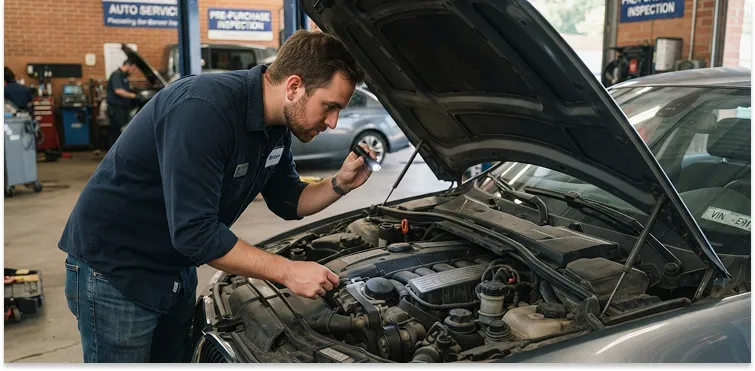
Start with a visual inspection of the entire engine compartment. A well-maintained engine bay usually reflects how the owner has cared for the vehicle.
Look for:
- Excessive dirt, grease, or oil buildup.
- Rust around engine components.
- Loose wires or damaged electrical connections.
- Missing covers or broken parts.
- Signs of previous repairs.
A slightly dirty engine is normal, but excessive oil residue or heavy grime may indicate leaks or poor maintenance.
Also check if the engine bay looks recently cleaned. A seller may wash the engine to hide leaks, so look carefully around seals and joints.
Step 2: Check Engine Oil Condition
Engine oil provides lubrication and protects internal engine components.
Checking oil quality is one of the most important parts of a pre-purchase engine inspection.
For anyone buying a Car for the first time, inspecting the engine oil can help identify hidden problems and avoid overpaying for a vehicle that may require costly repairs after purchase.
Remove the oil dipstick and examine:
- Oil color: Clean oil is usually amber or light brown. Very dark oil may indicate overdue maintenance.
- Oil level: Low oil levels can suggest poor maintenance or possible oil consumption.
- Oil texture: Thick, sludgy, or contaminated oil can indicate internal engine problems.
Also inspect the oil cap. If you notice a creamy or milky substance underneath, it may indicate coolant mixing with oil, which can be a sign of a serious engine issue.
Step 3: Look for Engine Fluid Leaks
Fluid leaks are common warning signs in used vehicles. Even small leaks can develop into expensive repairs.
Check underneath the engine and around components for:
- Engine oil leaks: Usually dark brown or black.
- Coolant leaks: Often green, orange, pink, or yellow depending on the coolant type.
- Transmission fluid leaks: Usually red or brown.
- Brake fluid leaks: Clear to yellowish in color.
Pay attention to wet areas around:
- Engine seals.
- Valve cover gasket.
- Oil pan.
- Radiator connections.
- Hoses.
A leaking engine may require immediate repairs after purchase.
Step 4: Inspect the Cooling System
The cooling system prevents the engine from overheating. A faulty cooling system can cause severe engine damage.
Check:
- Radiator condition.
- Coolant level.
- Coolant reservoir.
- Radiator hoses.
- Signs of coolant leaks.
Avoid opening the radiator cap when the engine is hot because pressurized coolant can cause injuries.
Warning signs include:
- Low coolant levels.
- Rust-colored coolant.
- Cracked hoses.
- Overheating history.
- Frequent coolant top-ups.
Checking the cooling system carefully can help you identify signs of a bad used car you should avoid.
Also, stay aware of dealer tricks to watch out for, such as temporary fixes that hide cooling problems instead of properly repairing them.
Step 5: Check Engine Belts and Hoses
Engine belts and hoses are essential components that help the engine operate smoothly.
Damaged or worn-out parts can cause serious engine problems, unexpected breakdowns, and expensive repairs.
During your inspection, carefully check the engine belts for:
- Cracks or visible damage that may indicate wear and aging.
- Fraying edges or signs that the belt is starting to break apart.
- Loose or improper tension that can affect engine performance.
- Missing sections or damaged areas that require immediate replacement.
Also inspect the engine hoses for:
- Cracks or splits that can cause fluid leaks.
- Soft, swollen, or hardened areas showing signs of deterioration.
- Coolant or fluid leaks around hose connections.
- General signs of aging or poor condition.
A well-maintained vehicle should have belts and hoses that are clean, flexible, properly connected, and free from visible damage.
Replacing these components can be costly, so identifying problems before purchase can help you avoid unexpected expenses.
Step 6: Start the Engine and Listen Carefully
Starting the engine is one of the most important inspection steps. Pay attention to how the engine behaves during startup.
A healthy engine should:
- Start quickly.
- Run smoothly.
- Maintain a steady idle.
- Produce normal engine sounds.
Listen for unusual noises such as:
- Knocking sounds.
- Ticking noises.
- Grinding sounds.
- Squealing belts.
- Loud vibrations.
Also observe the dashboard warning lights. The check engine light, oil pressure warning light, or overheating warning light should not remain illuminated after startup.
Step 7: Check Exhaust Smoke and Engine Emissions
Exhaust smoke can reveal hidden engine problems that may not be visible during a basic inspection.
Before buying a used car, check the exhaust for unusual smoke, smells, or excessive emissions.
Look for these warning signs:
- Blue Smoke: May indicate the engine is burning oil due to worn internal components.
- White Smoke: Can suggest coolant entering the engine, which may point to serious issues.
- Black Smoke: Often indicates excess fuel consumption or fuel system problems.
A healthy engine should produce little to no visible smoke. If you notice continuous smoke or unusual exhaust behavior, consider getting a professional inspection before purchasing the vehicle.
Step 8: Test Engine Performance During a Drive
A test drive helps you understand how the engine performs in real driving conditions.
It allows you to identify problems that may not appear during a stationary inspection.
During the drive, check for:
- Smooth acceleration without hesitation or loss of power.
- Stable engine performance at different speeds.
- Smooth idling without unusual vibrations or shaking.
- Normal response when pressing the accelerator.
Pay attention to warning signs such as strange noises, delayed acceleration, rough running, or unusual smells.
A healthy engine should deliver consistent power and operate smoothly throughout the drive.
Step 9: Use an OBD2 Scanner for Engine Diagnostics
An OBD2 scanner is a useful tool for checking the vehicle’s computer system. It can identify stored fault codes related to engine performance.
An OBD2 scan can reveal issues with:
- Engine sensors.
- Fuel system.
- Emissions system.
- Ignition problems.
- Transmission-related faults.
However, remember that a scanner does not replace a complete mechanical inspection. Some problems require physical testing.
Common Engine Problems to Check Before Buying a Used Car
Before purchasing a used car, it is important to identify common engine problems that may lead to expensive repairs in the future.
A detailed inspection can help you avoid buying a vehicle with hidden mechanical issues.
Look out for these common engine warning signs:
- Oil leaks: May indicate damaged seals, gaskets, or poor maintenance.
- Overheating issues: Can point to cooling system problems or serious engine damage.
- Unusual engine noises: Knocking, ticking, or grinding sounds may indicate internal problems.
- Excessive smoke: Different smoke colors can reveal oil burning or combustion issues.
- Engine misfires: May cause rough running, poor acceleration, and reduced fuel efficiency.
- Warning lights: Check engine or oil pressure lights should never be ignored.
- Low performance: Loss of power or slow acceleration can indicate engine wear.
Identifying these problems before purchase can help you negotiate a better price or avoid a costly repair situation after buying the vehicle.
How to Know If a Used Car Engine Is Well Maintained?
A well-maintained engine usually shows clear signs of regular care and proper servicing.
Before buying a used car, look for indicators that the previous owner followed a consistent maintenance routine.
Signs of a healthy and well-maintained engine include:
- Clean and properly leveled engine oil with no signs of contamination.
- Regular maintenance records showing oil changes and servicing history.
- No visible fluid leaks around engine components.
- Smooth startup and quiet operation without unusual noises.
- Stable engine temperature without overheating issues.
- No warning lights on the dashboard.
- Consistent performance with smooth acceleration and fuel efficiency.
A vehicle’s service history is often more reliable than its appearance.
A clean engine with proper maintenance records is usually a better choice and can help you avoid costly repairs in the future.
Common Mistakes When Inspecting a Car Engine
Many buyers focus only on the car’s appearance and overlook important engine checks.
Avoiding common inspection mistakes can help you identify hidden problems and make a better purchase decision.
Here are some mistakes to avoid:
- Checking only the exterior condition: A clean-looking car may still have engine problems.
- Inspecting a warm engine: A seller may warm up the engine to hide starting issues or unusual noises.
- Ignoring maintenance history: Service records provide important information about previous care.
- Skipping fluid checks: Low oil levels or leaks can indicate costly repairs.
- Ignoring warning lights: Dashboard alerts should always be investigated before purchase.
- Not taking a test drive: Engine issues may only appear while driving.
- Skipping a professional inspection: A mechanic can identify problems that are difficult for buyers to notice.
Taking the time to inspect the engine properly can help you avoid unexpected repair costs and choose a more reliable used vehicle.
Should You Hire a Mechanic Before Buying a Used Car?
Yes, hiring a professional mechanic is highly recommended, especially when buying an expensive vehicle, a car with limited service history, or buying a car for the first time.
A mechanic can identify hidden problems that may not be noticeable during a basic inspection.
A professional inspection is also valuable when buying a car on a tight budget, as it helps you avoid unexpected repair costs that could exceed your savings.
A mechanic can perform:
- Detailed engine inspection.
- Compression testing.
- Computer diagnostics.
- Suspension checks.
- Transmission inspection.
Professional inspection costs are usually much lower than unexpected engine repairs after purchase.
Final Engine Inspection Checklist Before Purchase
Before buying a used car, complete a final engine inspection to make sure you are making a reliable investment.
Use this complete car inspection checklist to review the most important engine components and warning signs.
✅ Check engine bay condition
✅ Inspect engine oil quality and level
✅ Look for fluid leaks
✅ Check coolant system
✅ Inspect belts and hoses
✅ Start the engine from cold
✅ Listen for unusual sounds
✅ Check exhaust smoke
✅ Complete a test drive
✅ Scan the vehicle with an OBD2 scanner
✅ Review maintenance history
✅ Get a mechanic inspection
A careful engine inspection can help you identify potential problems, avoid costly repairs, and choose a used vehicle with better reliability and long-term value.
Final Thoughts
Inspecting a car engine before purchase is one of the most important steps when buying a used vehicle. A careful inspection can help you avoid hidden problems, expensive repairs, and unreliable vehicles.
By checking the engine condition, fluids, leaks, performance, and diagnostic reports, you can better understand the true condition of the car before making a decision.
If you are unsure about any mechanical issue, always consider getting a professional inspection. A small investment in checking the engine today can save you significant money and stress in the future.