
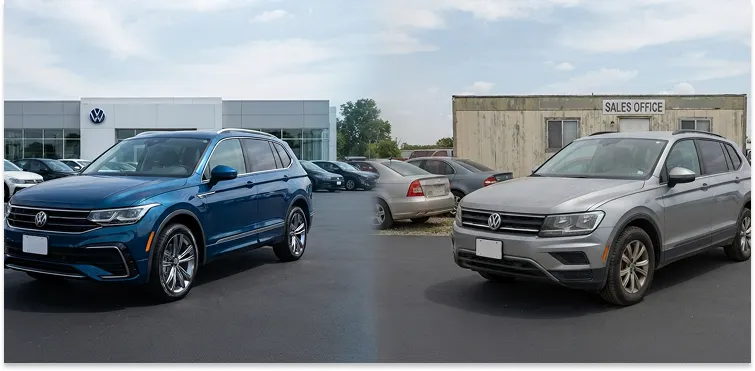
Buying a used car can be stressful because it often comes with uncertainty. Many buyers worry about hidden accident history, unexpected repair costs, and whether they are truly getting value for money.
This confusion becomes even bigger when choosing between Certified Pre-Owned (CPO) and regular used cars. One offers extra checks and warranty protection, while the other is more affordable but comes with more risk and fewer guarantees.
In this guide, we’ll break down both options clearly and simply. You’ll get a complete comparison so you can understand the real differences and confidently choose the right car for your needs and budget.
Certified Pre-Owned vs Regular Used Car: Key Differences (Table)
When choosing a used car, you’ll usually come across two options: Certified Pre-Owned (CPO) and regular used cars.
While both are previously owned, they differ in quality, warranty, and overall value. The table below highlights the key differences to help you decide more easily.
| Factor | Certified Pre-Owned (CPO) | Regular Used Car |
| Inspection & Quality Checks | Multi-point inspection by manufacturer | Basic or no standardized inspection |
| Warranty Coverage | Extended manufacturer-backed warranty | Limited or no warranty |
| Age & Mileage | Newer models with lower mileage | Any age or mileage |
| Price | Higher price due to certification | More affordable options available |
| Vehicle History | Fully verified and documented | May vary depending on seller |
| Financing Offers | Better interest rates and dealer deals | Standard or higher interest rates |
| Extras | Roadside assistance, perks included | Usually no extras |
| Depreciation | Slower depreciation due to quality assurance | Faster depreciation |
1. Inspection & Quality Checks
One of the biggest differences between CPO and regular used cars is how thoroughly they are inspected before being sold, which is why an inspection checklist before buying becomes especially important when evaluating a regular used car.
Certified Pre-Owned
A Certified Pre-Owned vehicle goes through a strict multi-point inspection process, often ranging from 100 to 300 checkpoints depending on the manufacturer. This includes:
- Engine performance checks
- Brake and suspension inspection
- Interior and exterior condition assessment
- Electrical system testing
- Tire and alignment checks
- Replacement of worn-out parts
If anything doesn’t meet the manufacturer’s standards, it is repaired or replaced before the car is certified.
This process ensures that the car is in near-new condition, even though it has been previously driven.
Regular Used Car
A regular used car does not follow a standardized inspection process. The level of inspection depends on:
- The seller’s honesty
- The dealership’s internal policy
- Or sometimes, no inspection at all (especially private sales)
This means the condition of the vehicle can vary widely. Some used cars may be in excellent shape, while others may hide mechanical or cosmetic issues.
Key takeaway: CPO cars offer consistency and reliability, while regular used cars require careful personal inspection.
2. Warranty Coverage
Another major difference between CPO and regular used cars is the type and level of warranty protection offered to the buyer, especially when comparing a new vs used car decision where coverage plays a key role.
CPO (Certified Pre-Owned)
One of the biggest advantages of a CPO car is the extended warranty coverage. This usually includes:
- Manufacturer-backed warranty extension
- Powertrain warranty (engine and transmission)
- Limited bumper-to-bumper coverage
- Sometimes additional perks like free maintenance for a period
This warranty reduces the risk of unexpected repair costs and adds peace of mind.
Used Car
Regular used cars often come with:
- No warranty (private sellers)
- Short dealer warranty (30–90 days in some cases)
- Optional paid extended warranty
However, coverage is usually limited and less comprehensive than CPO programs.
Key takeaway: CPO = protection. Used car = higher risk, lower cost.
3. Vehicle Age & Mileage Limits
CPO cars usually come with strict age and mileage limits, while regular used cars can vary widely and may include older, high-mileage options—some of which may show clear signs of a bad used car you should avoid, so careful checking is important.
Certified Pre-Owned
Manufacturers impose strict eligibility rules for CPO cars:
- Usually less than 5–7 years old
- Mileage typically under 80,000–100,000 km (varies by brand)
- Must have clean service history
This ensures that only relatively newer and well-maintained vehicles qualify.
Regular Used Car
Regular used cars have no restrictions:
- Can be very old or very new
- High mileage vehicles are common
- Service history may be incomplete or missing
This opens up a wider selection, especially for budget buyers.
Key takeaway: CPO cars are newer and more controlled; used cars offer more variety.
4. Price Difference
One of the most noticeable differences between CPO and regular used cars is the upfront price you pay and the value you get in return.
Certified Pre-Owned
CPO cars are more expensive because you are paying for:
- Inspection process
- Warranty coverage
- Dealer certification
- Refurbishment costs
- Brand assurance
On average, CPO cars can cost 10% to 25% more than similar used vehicles.
Used Car
Regular used cars are more budget-friendly:
- Lower upfront cost
- More negotiation flexibility
- Private sellers often offer better deals
However, a lower price may come with hidden repair risks.
Key takeaway: CPO costs more upfront, but reduces future financial uncertainty.
5. Vehicle History Transparency
Another important difference is how clearly the vehicle’s past ownership, accidents, and maintenance records are verified and shared with the buyer.
Certified Pre-Owned
CPO vehicles come with a fully verified vehicle history report, which typically includes:
- Accident history
- Ownership records
- Service maintenance logs
- Mileage verification
- Title status (clean or rebuilt disclosure)
Dealers must ensure transparency before certification.
Regular Used Car
For regular used cars:
- History depends on seller honesty
- Reports may not always be provided
- Hidden accidents or repairs are possible
Buyers often need to purchase third-party reports for verification.
Key takeaway: CPO = transparency guaranteed; used = buyer must verify.
6. Financing & Offers
CPO and regular used cars also differ in the financing options available, including interest rates, loan terms, and special dealer incentives.
Certified Pre-Owned
CPO cars often come with special financing offers, such as:
- Lower interest rates
- Longer repayment terms
- Manufacturer-backed loan programs
- Seasonal promotional deals
This makes monthly payments more manageable despite the higher price.
Used Car
Used cars usually have:
- Standard bank loan rates
- Higher interest rates (especially older vehicles)
- Fewer promotional offers
Loan approval may also depend more heavily on vehicle condition.
Key takeaway: CPO often provides better financing conditions.
7. Roadside Assistance & Extras
Another key difference lies in the additional benefits included, such as roadside assistance, free maintenance, and other ownership perks.
Certified Pre-Owned
Many CPO programs include additional benefits such as:
- Roadside assistance
- Free towing in emergencies
- Trip interruption coverage
- Complimentary maintenance services
- Sometimes even exchange guarantees
These perks add real value and convenience.
Used Car
Regular used cars usually do not include extras unless:
- The dealer offers a limited package
- You purchase add-on services separately
Otherwise, you are responsible for all emergency costs.
Key takeaway: CPO gives added peace of mind beyond just the car.
8. Depreciation Factor
Another key difference is how quickly the car loses its value over time and how that impacts long-term resale value and ownership cost.
Certified Pre-Owned
CPO cars generally experience:
- Slower depreciation than regular used cars
- Better resale value due to certification
- Stronger buyer trust in the resale market
Because they are already inspected and certified, they maintain value more effectively.
Used Car
Regular used cars:
- Depreciate faster
- May lose resale value depending on condition
- Heavily influenced by maintenance history
A poorly maintained used car can lose value quickly.
Key takeaway: CPO cars are better for long-term value retention.
Which One Should You Buy?
Choosing between a Certified Pre-Owned car and a regular used car depends on your budget, risk tolerance, and long-term goals.
Let’s simplify it.
Buy a CPO when:
A Certified Pre-Owned car is a better choice if:
- You want peace of mind and reliability
- You prefer warranty protection
- You are buying from a dealership
- You want a newer car with lower mileage
- You are willing to pay more for fewer risks
- You want better financing options
- You plan to keep the car for several years
In short, CPO is ideal for buyers who prioritize safety, trust, and long-term stability over upfront savings.
Buy a Used Car when:
A regular used car makes more sense if:
- You are on a tight budget
- You want the lowest possible purchase price
- You are comfortable inspecting vehicles yourself
- You can handle potential repair costs
- You are buying a temporary or second car
- You want more flexibility in model and age options
- You are experienced in evaluating car condition
Used cars are ideal for buyers who prioritize affordability and flexibility over warranties and guarantees.
Final Verdict
There is no single winner when comparing Certified Pre-Owned and regular used cars. The best choice depends on whether you prioritize cost savings or peace of mind.
A CPO car offers reliability, warranty coverage, and better quality assurance, but at a higher price. A regular used car is more affordable and offers more options, but comes with higher risk and requires careful inspection.
Ultimately, the right decision depends on your budget, comfort level, and how much risk you are willing to take.