
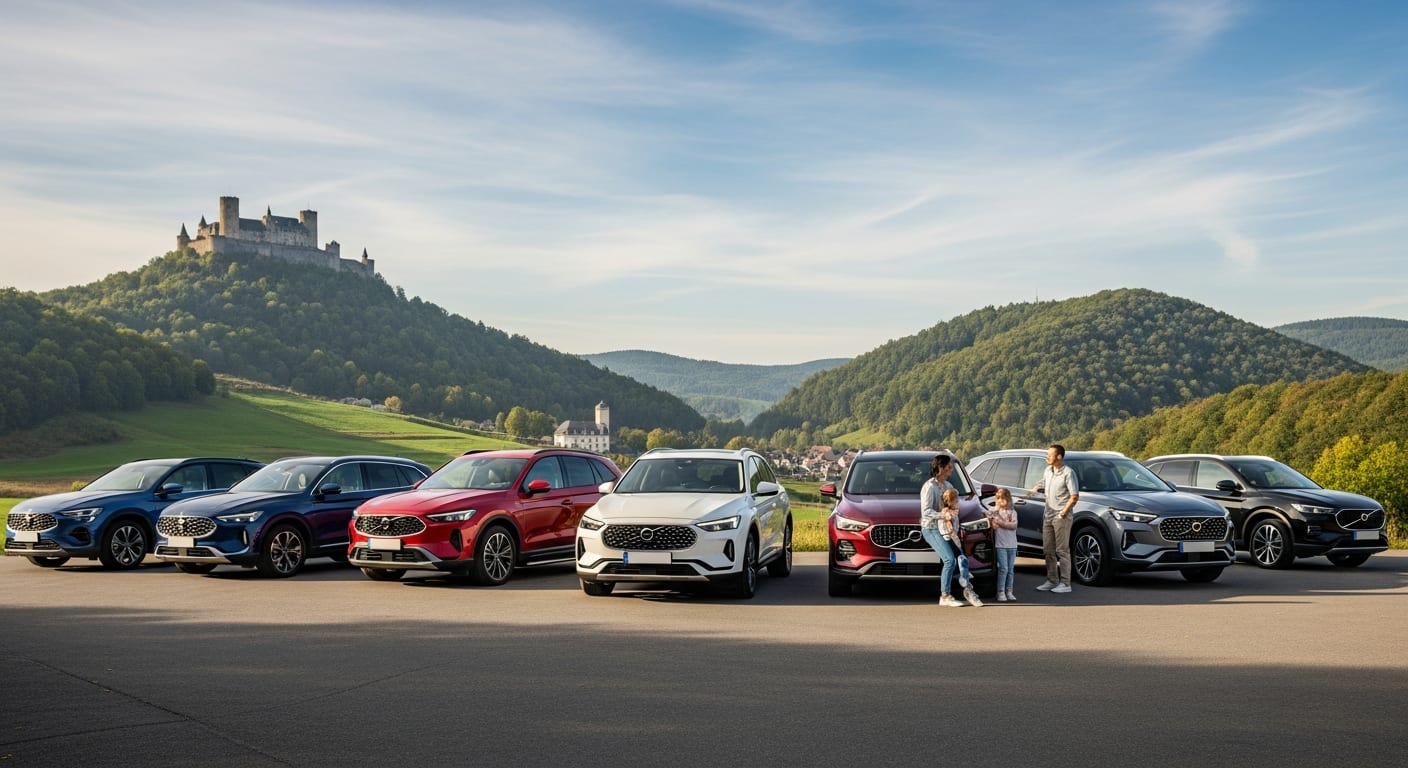
Finding the right SUV as a US military family stationed in Germany isn’t just about budget and cargo space. It’s about navigating narrow European streets, weekend trips to Austria, and PCS moves that might come with 30 days’ notice. The best family SUVs for military families in Germany combine USAREUR insurance compatibility, fuel efficiency for European gas prices, and enough space to haul your kids and all their sports gear to the Kaiserslautern Sportsplex.
Here’s the reality: You need something different than what works in Colorado Springs.
Germany’s roads are tighter. Parking spots are smaller (significantly smaller). And while that Ford Expedition looked perfect stateside, it’ll feel like piloting a yacht through medieval village centers. Let’s break down the seven SUVs that actually make sense for military families living in Deutschland in 2026.
Why Military Families Need Different SUVs in Germany
Military families stationed in Germany face unique transportation challenges that civilian buyers never consider. USAREUR insurance requirements, NATO driving permits, and the reality of European-sized parking spaces all factor into your decision. Plus, you’re likely planning road trips to places like Prague, Munich, or the Swiss Alps—journeys that require comfortable highway cruising and decent fuel economy.
The base exchange parking lot tells the story. You’ll see more mid-size SUVs than full-size trucks. There’s a reason for that.
Gas prices in Germany average €1.85 per liter in 2026 (roughly $7.50 per gallon when converted). That V8 engine suddenly doesn’t seem so practical. Your insurance through USAA or Geico works differently here too—some vehicles qualify for better rates through USAREUR’s specific coverage requirements.
The Top 7 Family SUVs for US Military in Germany (2026 Rankings)
1. Toyota Highlander Hybrid – The Goldilocks Choice
The Highlander Hybrid hits that sweet spot between American comfort and European practicality. With 36 combined MPG and seating for eight, it’s the most popular choice among military families at Ramstein and Stuttgart for good reason.
Three rows mean your kids and their friends all fit. The hybrid powertrain saves you €200-300 monthly compared to traditional gas SUVs (based on typical military family driving patterns). And at 194.9 inches long, it actually fits in German parking garages—barely, but it fits.
The 2026 model includes Toyota’s Safety Sense 3.0 with improved pedestrian detection. That matters when you’re navigating tight village streets where cyclists appear from nowhere and cobblestones make everything feel unpredictable.
Resale value? Outstanding. When you PCS back to the States or to your next duty station, Highlanders hold their value better than almost any competitor.
2. Mazda CX-90 PHEV – The Efficiency Champion
Want to commute to base on pure electric power? The CX-90 plug-in hybrid delivers 26 miles of EV range—enough for most families to drive from off-base housing to Ramstein AB and back without burning a drop of gas.
This SUV combines luxury-level interior quality with plug-in efficiency that actually makes financial sense in Europe. Charge it overnight using your on-base or off-base outlet, and your daily commute costs about €2 in electricity instead of €8-10 in gasoline.
The third row is admittedly tight (best suited for kids under 12), but the materials quality rivals German luxury brands at a significantly lower price point. Mazda’s i-Activsense safety suite works exceptionally well on Autobahn speeds, with adaptive cruise control that actually feels smooth at 130 km/h.
One consideration: PHEV tax benefits vary by German state if you’re registering locally versus keeping US plates through military exemptions.
3. Volkswagen Atlas – The German-American Hybrid
Built in Tennessee but designed with European sensibilities, the Atlas offers something unique: German brand reliability with American space and a dealer network that spans both continents.
Why does this matter? Service and parts availability. Every mid-sized German city has multiple VW dealers who know this vehicle inside and out. Compare that to trying to find a certified Toyota technician in rural Bavaria when you’re road-tripping.
The 2026 Atlas comes standard with Car-Net connectivity, which integrates better with European traffic systems than many American brands. Real-time traffic updates actually help when you’re navigating around a stau (traffic jam) on the A6.
Three rows, 20.6 cubic feet of cargo space behind the third row, and a ride height that handles cobblestones without rattling your fillings loose. The 2.0T four-cylinder delivers adequate power while returning 23 MPG combined—not hybrid territory, but respectable.
4. Honda Pilot TrailSport – The Adventure-Ready Family Hauler
The TrailSport trim transforms the already-capable Pilot into something genuinely ready for European adventures. All-wheel drive with snow mode, 8 inches of ground clearance, and all-terrain tires make this the go-to choice for families who actually use their weekends exploring the Alps.
Planning a ski trip to Garmisch? Taking the kids to hike in the Black Forest? The Pilot handles mountain roads and unpaved parking areas that would make a crossover SUV nervous.
Interior space is generous by any standard—96.5 cubic feet of maximum cargo capacity means you can pack for a two-week road trip and still have room for the souvenirs you’ll buy in Prague. The second-row captain’s chairs (optional) create the kind of comfort that keeps kids happy during five-hour drives.
Honda’s reputation for reliability matters even more when you’re overseas. Parts availability through the base auto hobby shop? Usually good. Third-party mechanics in Germany familiar with Honda? Plenty.
Fuel economy sits at 22 MPG combined—not class-leading, but acceptable given the capability you’re getting.
5. Hyundai Palisade Calligraphy – The Luxury Value Play
Here’s what most military families discover: The Palisade Calligraphy delivers 90% of the luxury experience of a German premium SUV at 60% of the cost. Nappa leather, 12-speaker Harman Kardon audio, and second-row ventilated seats create an environment that makes those long drives to Venice or Paris genuinely comfortable.
The 2026 model includes Hyundai’s Highway Driving Assist 2.0, which works remarkably well on German Autobahns. It’ll maintain lane position and adaptive distance even at 140 km/h (though you’re still fully responsible for controlling the vehicle at those speeds).
Three rows accommodate eight passengers. The third row actually has decent headroom—unusual in this segment. And with 86.4 cubic feet of total cargo space, you can transport everything from IKEA purchases to ski equipment for the entire family.
Warranty coverage? Hyundai’s 10-year/100,000-mile powertrain warranty transfers between duty stations and even survives overseas deployment. That peace of mind has real value when you’re stationed 5,000 miles from the nearest stateside dealer.
6. Kia Telluride SX – The Practical Alternative
The Telluride shares its platform with the Palisade but offers a slightly different value proposition. While the Palisade leans luxury, the Telluride emphasizes utility and family-friendly features that matter during a three-year tour in Germany.
Take the rear-seat entertainment system. On paper, it’s a luxury add-on. In practice, it’s the difference between peaceful drives through the Alps and constant “are we there yet?” questions from the back rows.
Cargo management is thoughtful—underfloor storage, multiple tie-down points, and a power liftgate with hands-free opening (crucial when you’re carrying groceries from the commissary). The 87 cubic feet of maximum cargo space handles Costco runs, camping gear, and that inevitable accumulation of household goods that happens during overseas tours.
Fuel economy matches the Palisade at 21 MPG combined. Not spectacular, but the 3.8L V6 delivers smooth, confident power that makes Autobahn merging stress-free.
Kia’s dealer network in Germany is solid. Parts availability through European suppliers works well, and the brand’s reputation for reliability has improved dramatically over the past decade.
What Makes an SUV “Military-Family Ready” in Germany?
USAREUR insurance compatibility tops the list of practical considerations. Some vehicles qualify for better rates through military-specific insurance programs. Before you fall in love with any SUV, check with your insurance provider about coverage specifics for overseas assignments.
Size matters—but not how you think. Bigger isn’t better in Germany. You need something that:
- Fits in standard European parking spaces (under 16 feet long ideal)
- Navigates medieval village streets without clipping side mirrors
- Clears underground parking garage height restrictions (most limit to 6.5 feet)
- Handles tight turns without requiring three-point maneuvers
Fuel efficiency directly impacts your monthly budget. Calculate your typical driving—base commute, weekend trips, grocery shopping—and multiply by European fuel costs. A vehicle that gets 30 MPG versus 22 MPG saves you roughly €150-200 monthly based on average military family driving patterns.
Service availability ranges from excellent (Toyota, VW, Honda) to challenging (some American brands with limited European presence). The base auto hobby shop helps, but you’ll eventually need civilian mechanics for warranty work or major repairs.
The Hidden Costs Nobody Mentions
Road tax in Germany applies to US-plated vehicles after 12 months (regulations vary by state). Some families avoid this by maintaining US registration through military exemptions, but understanding local rules prevents unpleasant surprises.
TÜV inspections (Germany’s vehicle safety inspection) might be required depending on your registration status and how long you plan to stay. Budget €100-200 for inspection and any required fixes.
Winter tires aren’t optional. They’re legally required from October through Easter (approximately) when conditions warrant. Budget €800-1,200 for a set of winter wheels and tires for these SUVs, plus seasonal changeover costs if you don’t do it yourself.
The Wild Card: Should You Consider European-Market SUVs?
Here’s the question families ask: What about buying a European-brand SUV while stationed here?
The BMW X5, Mercedes GLE, or Audi Q7 offer exceptional performance and perfect sizing for German roads—but they come with complications for military families. Shipping them back to the States involves import compliance costs. Parts and service exceed American-brand equivalents by 40-60%. And resale value stateside? Uncertain unless you target specific luxury markets.
That said, European delivery programs through brands like BMW and Volvo sometimes offer military-specific benefits. You take delivery at the factory, tour Europe, then ship the vehicle home with certain import exemptions. It’s worth exploring if you’re in the market for a premium SUV and plan to keep it long-term.
Most military families stick with American or Japanese brands for practical reasons that become obvious six months into your tour. Need help evaluating whether a European-market vehicle makes sense for your specific situation? Reach out to our team—we’ve helped hundreds of military families navigate these decisions.
Making the Final Decision: What Actually Matters
Test-drive on European roads before you commit. That crossover that felt perfect in Virginia might handle completely differently on German cobblestones and Autobahn speeds.
Your priority list should look something like this:
- Fuel efficiency – This affects your monthly budget more than any other factor
- Size and maneuverability – Can you actually park it where you live?
- Seating capacity – Do you need three rows, or would two rows with more cargo space serve you better?
- Service availability – Both on-base and in the German economy
- Resale value – What happens when you PCS in 2-3 years?
Insurance costs vary significantly between models. Get quotes for your specific situation before you commit. A vehicle that seems like a great deal might cost an extra €80 monthly to insure through USAREUR-approved providers.
The Toyota Highlander Hybrid Wins for Most Families
After analyzing reliability data, fuel efficiency, resale values, and real-world feedback from military families currently stationed in Germany, the Toyota Highlander Hybrid emerges as the best overall choice for 2026.
It’s not the cheapest. It’s not the most luxurious. It’s not even the most spacious.
But it balances all the factors that matter during a European tour better than any competitor. Fuel costs stay manageable. Parts and service availability is excellent. Resale value when you PCS remains strong. And the driving experience works equally well for your daily commute and weekend adventures across the continent.
The Mazda CX-90 PHEV takes second place for families who can reliably charge at home and want maximum efficiency. The Honda Pilot TrailSport claims third for adventurous families who prioritize capability over efficiency.
Your Next Step: Getting Behind the Wheel
Reading about SUVs only gets you so far. You need to experience how these vehicles feel on actual German roads—the cobblestones, the tight parking spaces, the Autobahn speeds, and those village streets where you’ll swear two cars can’t possibly pass each other (but somehow they do).
Start with test drives on base if available, then venture off-base to test real-world parking and maneuverability. Bring your entire family. Have the kids climb in and out of the third row. Load the cargo area with realistic amounts of gear. Drive at Autobahn speeds if the opportunity presents itself.
The right SUV transforms your Germany tour from logistically challenging to genuinely enjoyable. Those weekend trips to Austria, France, or the Czech Republic become adventures instead of endurance tests. Your daily commute feels manageable rather than stressful.
Questions about which SUV fits your family’s specific needs? Wondering about financing options through military lending programs or how to navigate German registration requirements? Get in touch with us—we specialize in helping military families make smart vehicle decisions during overseas assignments.
Your three-year tour in Germany deserves the right vehicle. Choose wisely.