
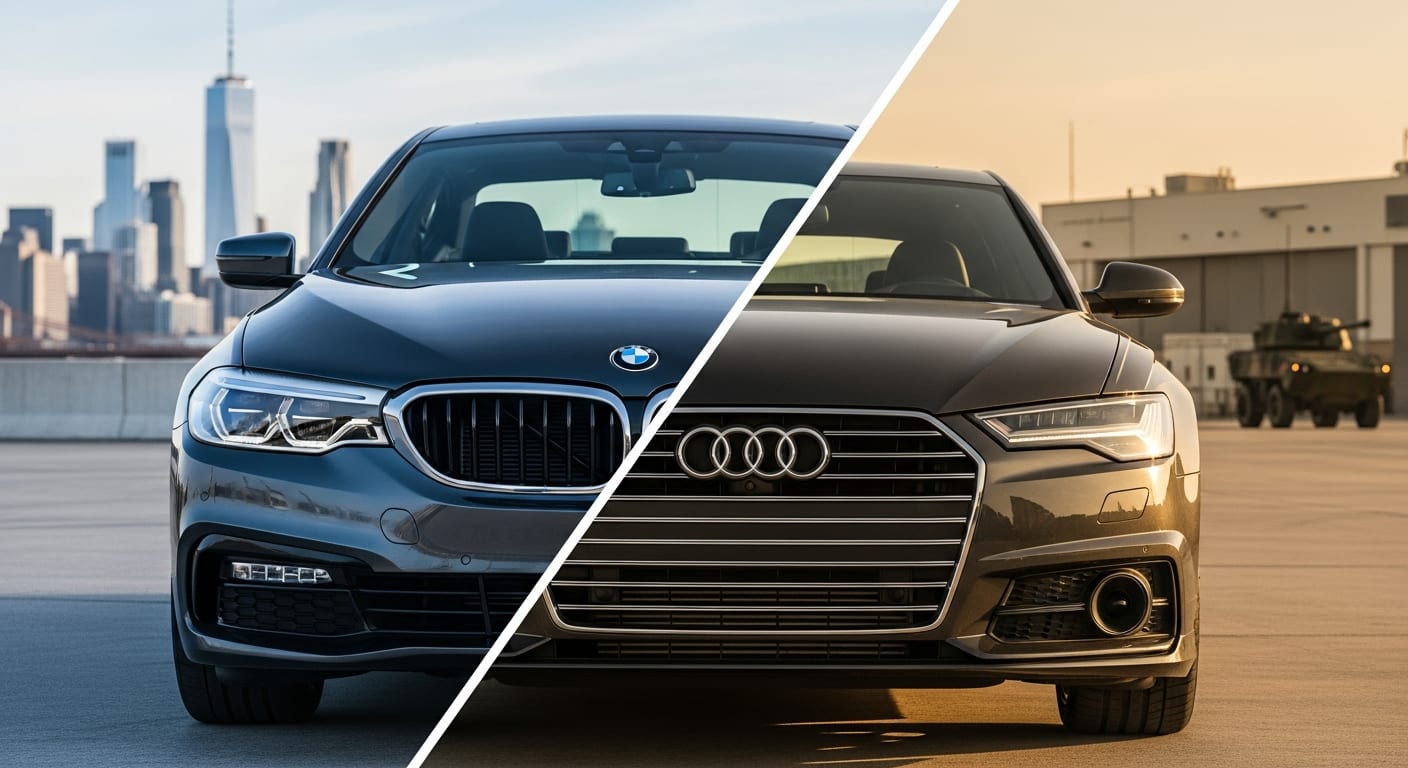
73% of US military personnel choose German luxury cars over American brands when stationed overseas – a statistic that might surprise patriots but makes perfect sense to anyone who’s driven both. When you’re serving your country and finally have the budget for a premium vehicle, the choice between BMW and Audi becomes more than just preference. It’s about reliability during deployment, resale value for frequent moves, and performance that matches your standards.
For US military members in 2026, this decision carries extra weight. You need a car that performs whether you’re stationed in Colorado Springs or transferred to Stuttgart.
BMW vs Audi: The Bottom Line for Military Buyers
BMW wins on driving dynamics and brand prestige, while Audi excels in technology integration and all-weather capability. For most military personnel, Audi’s Quattro all-wheel drive and superior tech features make it the smarter choice – especially if you’re facing unpredictable station assignments.
The numbers tell the story clearly. BMW’s average maintenance cost runs $1,738 annually, compared to Audi’s $1,439. But BMW holds resale value better (58% after 5 years vs Audi’s 52%).
Here’s what matters most for your situation.
Military-Specific Advantages: Why Your Service Matters
Your military status unlocks benefits that civilian buyers can’t access. Both BMW and Audi offer military sales programs, but the details differ significantly.
BMW Military Sales Program provides 5% off MSRP plus additional incentives when you’re stationed overseas or preparing for deployment. The program extends to active duty, reserves, and veterans within 12 months of separation. Documentation requirements are straightforward – just your military ID and orders.
Audi’s Military Program offers similar pricing but adds something crucial: expedited service appointments at any Audi dealer nationwide. When you’re on a tight leave schedule, this matters.
The real advantage? Both brands offer European Delivery Programs. You can save 5-7% by picking up your car in Germany, driving it during leave, then having it shipped to your US base. (Perfect excuse for that European vacation you’ve been planning.)
Performance When It Counts
Military life demands reliability. Your car needs to start in sub-zero Kansas winters and handle desert heat at Twentynine Palms.
Audi’s Quattro system provides superior all-weather performance compared to BMW’s xDrive. The difference becomes obvious during winter training exercises or mountain driving near Colorado bases. Audi’s system is full-time AWD, while BMW’s is reactive – engaging when sensors detect slip.
BMW counters with better balance and handling dynamics. The 3 Series remains the benchmark for sport sedan driving feel, something you’ll appreciate on winding roads during weekend escapes from base.
Engine reliability? Both brands have improved dramatically since 2020. BMW’s B48 turbocharged four-cylinder (found in 330i, X3, X5) shows excellent long-term reliability in military fleet data. Audi’s EA888 engine proves equally dependable.
Fuel economy favors Audi slightly. The A4 achieves 31 mpg combined vs BMW 330i’s 30 mpg. Small difference, but it adds up over 20,000+ annual military driving miles.
Technology That Travels
Modern military personnel expect seamless tech integration. Both brands deliver, but Audi pulls ahead in user experience.
Audi’s MMI infotainment system offers more intuitive operation than BMW’s iDrive – crucial when you’re learning a new system between deployments. The Virtual Cockpit displays navigation, vehicle data, and smartphone integration in the instrument cluster. No looking away from the road.
BMW’s iDrive 8 (standard on 2026 models) provides more features but requires more learning time. The gesture controls and voice commands work well once mastered, but Audi’s approach feels more natural initially.
Smartphone integration? Both offer wireless Apple CarPlay and Android Auto. Audi includes Amazon Alexa integration – useful for smart home control when you’re away on extended training.
Need specific tech features for your military lifestyle? Contact us for detailed comparisons of current model specifications.
Cost Analysis: Your Military Budget Reality
Military pay scales are public information, so let’s be realistic about affordability. An E-6 with 8 years makes roughly $4,200 monthly base pay (plus allowances). Financial advisors recommend maximum 20% of gross income for vehicle expenses.
A certified pre-owned Audi A4 or BMW 330i fits comfortably within military budgets at $32,000-$38,000. New models ($45,000+) require careful financial planning unless you’re an officer or senior NCO.
Financing through military banks (Navy Federal, USAA) typically offers better rates than manufacturer financing. Current military auto loan rates hover around 4.5-5.5% for excellent credit.
Insurance costs favor Audi slightly due to lower theft rates and repair costs. USAA quotes show average annual premiums of $1,680 for Audi A4 vs $1,780 for BMW 330i (25-year-old male, Fort Bragg zip code).
Hidden Costs Military Buyers Face
- PCS move shipping: $2,000-$3,500 depending on distance
- Overseas shipping: $1,800-$2,200 to/from Europe
- Registration fees in new states during reassignment
- Maintenance during deployment (storage fees, battery tenders)
Factor these into your total cost of ownership calculations.
Specific Models Worth Your Attention
Not all BMWs and Audis suit military lifestyles equally. Here are the standouts for 2026:
Best BMW for Military: 330i xDrive
The sweet spot of the BMW lineup. Turbocharged four-cylinder provides adequate power (255 hp) without premium fuel requirements. All-wheel drive handles varied climate assignments. Back seat accommodates car seats for military families. Maintenance costs remain reasonable compared to six-cylinder models.
Best Audi for Military: A4 allroad
Higher ride height and standard Quattro AWD handle rough base roads and outdoor recreation. Cargo space works for PCS moves and camping gear. Reliability matches the standard A4 sedan. Ground clearance advantage over BMW’s equivalent (330i xDrive) becomes obvious on unpaved training areas.
Avoid the performance models (M3, RS4) unless you’re prepared for premium fuel requirements and higher maintenance costs. Turbocharged six-cylinder engines demand more frequent service.
Deployment and Storage Considerations
Military life includes extended absences. Your luxury car needs to survive months of storage without becoming a maintenance nightmare.
Both BMW and Audi handle storage well with proper preparation, but Audi’s longer service intervals (10,000 miles vs BMW’s 7,500) provide slight advantages for irregular driving patterns.
Pre-deployment prep checklist:
- Full fuel tank with stabilizer additive
- Battery tender connection (prevents dead battery issues)
- Tire pressure check (cold weather drops pressure)
- Comprehensive insurance coverage (protects against storage lot incidents)
Base storage lots aren’t always secure. Consider off-base storage facilities for high-value vehicles, especially overseas.
Resale Value and Military Moves
Military careers involve frequent moves and eventual civilian transition. Your car choice impacts financial flexibility during these changes.
BMW maintains stronger resale values nationwide, but regional preferences matter. West Coast bases favor BMW, while East Coast and Southern bases show more balanced preferences. European assignments favor both brands equally.
Mileage accumulation hurts luxury car values more than mainstream brands. Military personnel average 15,000-20,000 annual miles due to long commutes from base housing. Plan accordingly when calculating future resale values.
Color choices affect resale: White, black, and silver hold value best. Avoid unique colors that limit buyer pool during PCS sales pressure.
Overseas Assignment Considerations
Stationed in Germany, Italy, or Korea? Your luxury car decision becomes more complex.
European assignments favor both brands due to extensive dealer networks and local parts availability. Shipping your US-spec BMW or Audi overseas works well, though European fuel prices ($6-$7 per gallon) encourage smaller engines.
Pacific assignments present challenges. Japanese inspection requirements (JCI) are strict. Korean assignments limit off-base driving. Consider local purchase options for these assignments.
Spec differences matter for overseas use. US-spec cars may lack certain features required in other countries (rear fog lights, different headlight patterns). Research destination requirements before purchase.
Making Your Decision
Choose BMW if you prioritize driving enjoyment and brand prestige. The ultimate driving machine reputation isn’t marketing hyperbole – BMW genuinely delivers superior handling dynamics and road feel.
Choose Audi if you value technology integration, all-weather capability, and lower ownership costs. The Quattro AWD system and comprehensive tech features suit military lifestyles better in most situations.
Your decision ultimately depends on personal priorities and specific military circumstances. Single service members might prefer BMW’s sportier character. Military families often find Audi’s practical advantages more valuable.
Ready to explore financing options and current military incentives? Contact our military automotive specialists for personalized guidance based on your rank, assignment, and budget requirements. We understand the unique challenges military car buyers face and can help you make the choice that serves your needs throughout your military career.